8841 East Bell Road, Suite 101, Scottsdale, AZ 85260 | Rate: ★★★★★
Spinal Stenosis vs. Herniated Disc: What Is the Difference?

Spinal stenosis and a herniated disc can both cause back pain, neck pain, numbness, tingling, or weakness. Both conditions can put pressure on spinal nerves, but they affect the spine in different ways. In this guide, CPM explains the main differences between spinal stenosis vs. herniated disc, symptoms, causes, diagnosis, and treatment options.
Table of Contents
ToggleWhat Is Spinal Stenosis?
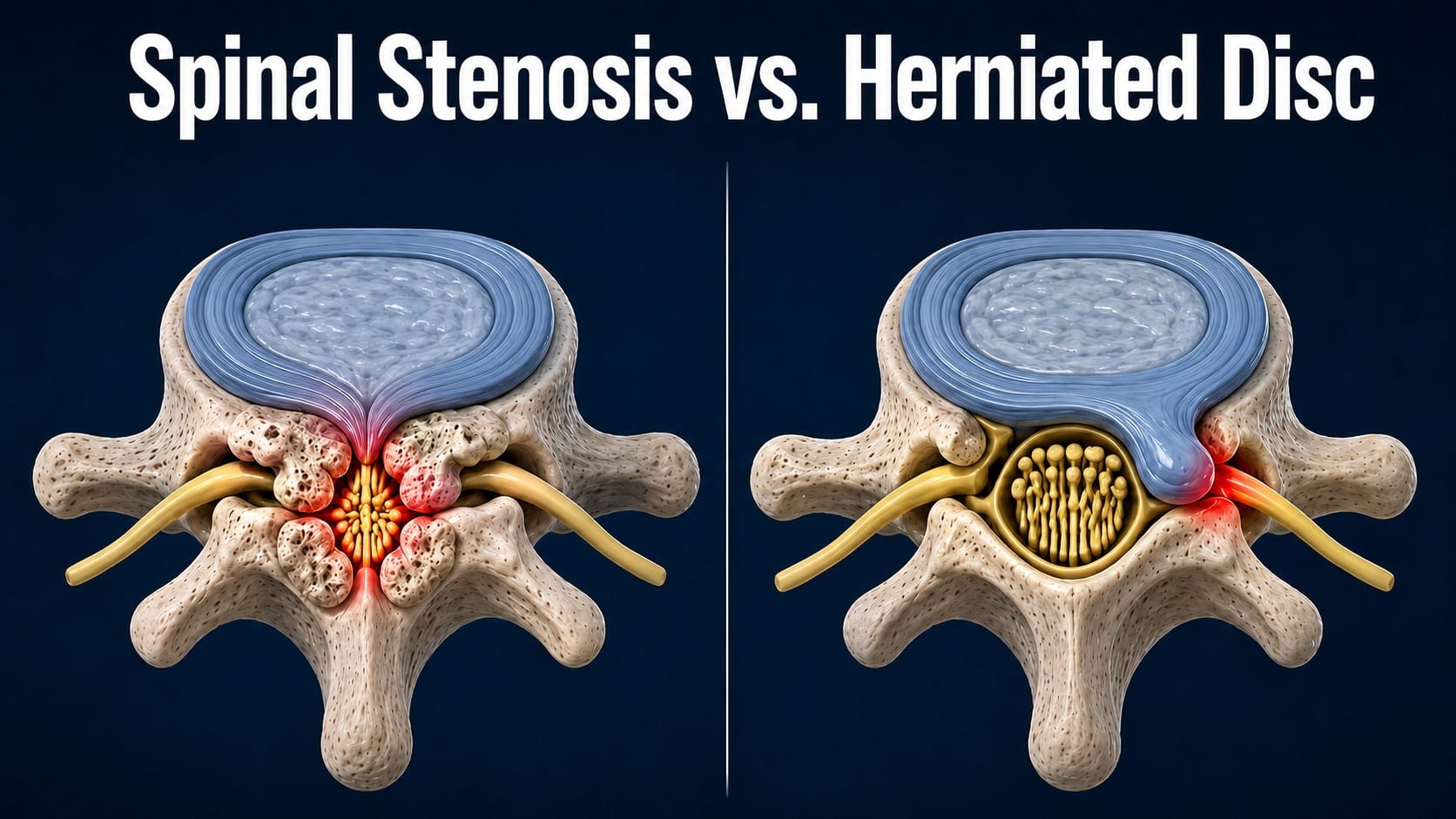
Spinal stenosis happens when the spinal canal or the spaces around the nerves become narrow. This can put pressure on the spinal cord or nerve roots. The condition often develops slowly.
Spinal stenosis often affects the lower back or neck. Lower-back stenosis may cause pain, numbness, or weakness in the legs. Neck stenosis may affect the arms, hands, balance, or ability to walk.
What Is a Herniated Disc?
Soft discs sit between the bones in your spine. They protect the bones and help your spine move. Each disc has a soft center and a firm outer layer. A herniated disc happens when the soft center pushes through a weak or torn part of the outer layer. It may then press on a nearby nerve.
What Are the Differences Between Spinal Stenosis and Herniated Disc?
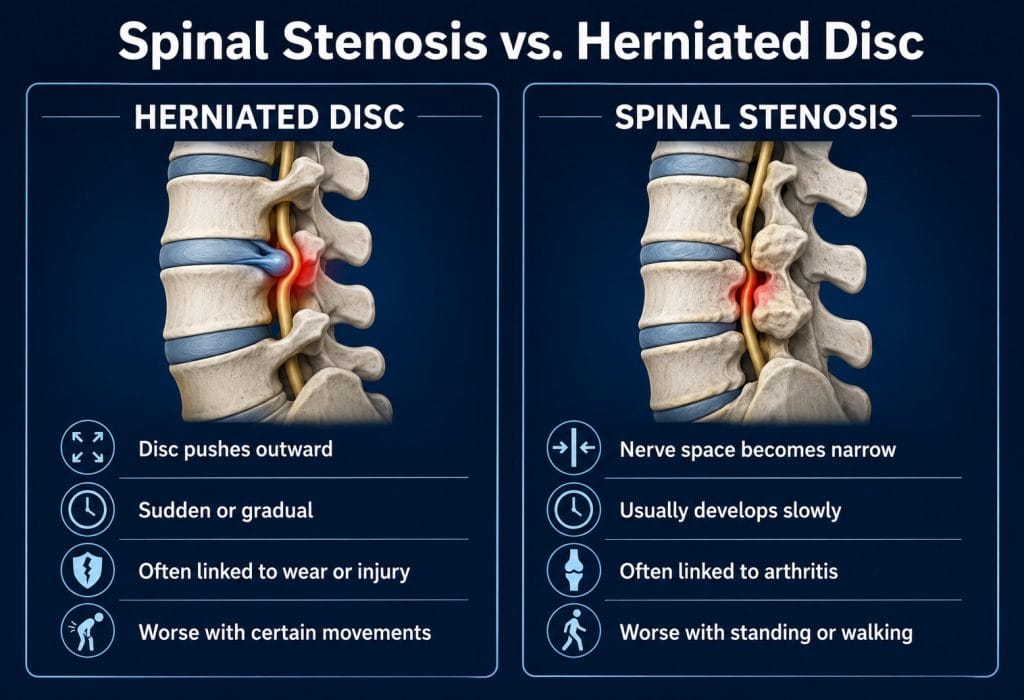
The main difference is how each condition affects the spine. A herniated disc involves damaged disc material, while spinal stenosis causes the spaces around the nerves to become narrow. There are several other differences between these conditions. Below, we explain the main differences.
| Comparison | Herniated Disc | Spinal Stenosis |
| Main problem | Disc material pushes through a weak outer layer | Spaces around the spinal cord or nerves become narrow |
| Onset | May start suddenly or slowly | Usually develops slowly |
| Common causes | Disc wear, lifting, twisting, or injury | Arthritis, bone spurs, thick ligaments, or disc changes |
| Common symptoms | Pain, numbness, tingling, or weakness | Pain, heaviness, numbness, weakness, or walking problems |
| Pain pattern | Certain movements may make symptoms worse | Standing or walking may make symptoms worse |
Symptoms
Both conditions can cause back or neck pain, numbness, tingling, weakness, or pain that moves into an arm or leg. A herniated disc may cause sharp or burning pain that travels down a leg or into an arm. Spinal stenosis may cause leg pain, heaviness, weakness, balance problems, or trouble walking. A medical exam is needed to find the cause.
Causes and Risk Factors
A herniated disc and spinal stenosis can develop for different reasons. Age-related changes, injuries, and pressure on the spine may increase the risk of both conditions.
Herniated disc causes:
- Aging and disc wear
- Heavy lifting
- Bending or twisting
- Back or neck injuries
- Heavy physical work
- Excess body weight
- Smoking
- Long periods of sitting
Spinal stenosis causes:
- Arthritis
- Bone spurs
- Thick spinal ligaments
- Worn or damaged discs
- A naturally narrow spinal canal
- Previous spinal injuries
- Previous spine surgery
Diagnosis
Both conditions are diagnosed through a medical history, physical exam, and imaging tests. However, the specialist looks for different changes in the spine.
- An MRI can show whether a herniated disc is pressing on a nerve.
- An MRI or CT scan can show if spinal stenosis has narrowed the spaces around the spinal cord or nerves.
The specialist may also check movement, strength, reflexes, feeling, balance, and walking. The scan results must match the symptoms and physical exam.
Treatment Options
Doctors may treat both conditions with physical therapy, medicine, activity changes, or spinal injections. However, each treatment has a different goal. For a herniated disc, treatment reduces swelling and pressure around the nerve. Most people improve without surgery.
If symptoms continue, a surgeon may remove the part of the disc that presses on the nerve. For spinal stenosis, treatment reduces pain and helps the person move more easily. If the narrow space causes serious pain, weakness, or walking problems, a surgeon may create more room around the nerves.
When to See a Specialist
See a pain management specialist if your pain lasts, keeps returning, or travels into an arm or leg. You should also get medical care if numbness, weakness, or walking problems affect your normal activities.
Get emergency care if you have:
- New bowel or bladder problems
- Trouble urinating
- Numbness around the groin or inner thighs
- Rapidly worsening weakness
- Serious balance problems
These symptoms may be signs of severe nerve pressure and need immediate care.
Final Thoughts
A herniated disc and spinal stenosis affect the spine in different ways. Both can cause pain, numbness, and weakness, but each may need a different treatment. Understanding spinal stenosis vs. herniated disc can help you know why a proper diagnosis matters.
Comprehensive Pain Management, founded by Dr. James KellerShabrokh, has over 30 years of experience helping patients find lasting pain relief. Our skilled team provides personalized care based on your condition and needs. Call us at (602) 971-8200 to schedule your consultation and take the next step toward moving with less pain.
FAQs
What is the best way to diagnose a herniated disc?
A specialist may use a medical history, physical exam, and nerve tests. An MRI can show the discs and nerves, but the results must match the patient’s symptoms.
Can a herniated disc cause spinal stenosis?
Yes. A herniated disc can press into the spinal canal and reduce the space around the nerves. This can cause or worsen spinal stenosis.
How do recovery times compare between these conditions?
Herniated disc symptoms may improve within weeks or months. Spinal stenosis often develops from long-term changes and may need ongoing care. Recovery is different for each person.
Is walking good for both conditions?
Walking may help maintain strength and movement. However, people with spinal stenosis may need shorter walks or breaks. Stop if walking makes pain, numbness, or weakness worse.

Dr. James KellerShabrokh
Dr. James KellerShabrokh is a board-certified specialist in Physical Medicine and Rehabilitation, focusing on spine, joint, muscle, and nerve injuries. He combines rehabilitative care, minimally invasive procedures, and preventive strategies to restore function, improve mobility, and provide long-term pain relief.