
8841 East Bell Road, Suite 101, Scottsdale, AZ 85260 | Rate: ★★★★★

Best Pain Medication for Lower Back Pain

Lower back pain can make it hard to sit, walk, sleep, or work. Medicines such as ibuprofen, naproxen, acetaminophen, and muscle relaxants may help. However, the right medicine depends on the cause of your pain, your symptoms, and your overall health. In this guide, CPM explains common options, their risks, and when to see a doctor.
Table of Contents
ToggleTop 10 Medicines for Lower Back Pain Relief
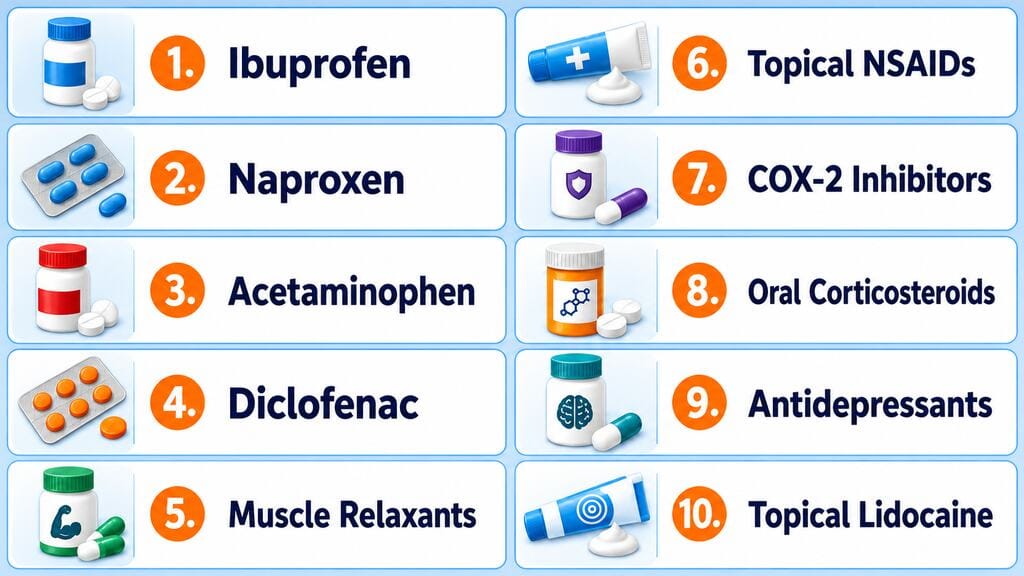
Doctors may suggest these medicines for new or long-lasting lower back pain. This list does not follow any order, as each option works in its own way. The right choice depends on the cause of your pain and your health.
1. Ibuprofen
Ibuprofen (Advil, Motrin) is an over-the-counter nonsteroidal anti-inflammatory drug, also called an NSAID. It may reduce both pain and inflammation. It may help with back pain caused by a minor injury, strain, or inflammation. However, ibuprofen is not safe for everyone.
2. Naproxen
Naproxen (Aleve) is an NSAID that you can buy over the counter or get with a prescription. It may last longer than ibuprofen and help with back pain caused by inflammation. Do not take naproxen with ibuprofen or another NSAID unless your doctor says it is safe. Using them together may cause serious health problems.
NSAIDs are best used at the lowest effective dose for the shortest time. They can increase the risk of stomach ulcers, bleeding, and kidney or heart problems, especially with long-term use.
3. Acetaminophen
Acetaminophen may ease pain, but it does not reduce swelling. It may help people who cannot take NSAIDs, but it does not work well for every type of back pain. Many cold, flu, sleep, and prescription medicines also contain acetaminophen. Check every label and do not use more than one product that contains it. Taking too much can seriously damage your liver.
4. Diclofenac
Diclofenac is an NSAID available in oral and topical forms. Topical diclofenac is placed directly on the painful area as a gel or patch. This medicine may reduce pain and inflammation. However, it can still cause side effects.
5. Muscle Relaxants
Prescription muscle relaxants may be considered when acute back pain involves painful muscle spasms. They are generally used for a short period. These medicines may cause:
- Sleepiness
- Dizziness
- Confusion
- Poor balance
- Slower reaction time
Do not drive, drink alcohol, or operate machinery until you know how the medicine affects you. Muscle relaxants may also interact with sleep medicines, opioids, and anxiety medicines.
6. Topical NSAIDs
You apply this medicine right onto the skin over the painful spot on your lower back. It sinks into the muscles and soft tissue underneath and calms the swelling there, which can ease the pain in that area. This works well for pain that sits close to the surface, such as sore or strained muscles.
Other topical products, such as capsaicin or menthol creams (for example, Bengay and Icy Hot), may also give short-term relief for pain close to the surface.
7. COX-2 Inhibitors
Celecoxib calms swelling inside the body. In the lower back, that swelling often causes pain and stiffness. When the swelling goes down, the pain may ease and moving around may feel easier. Doctors often choose this medicine when swelling plays a big part in the pain, and it tends to be gentler on the stomach than some other pain relievers.
8. Oral Corticosteroids
Oral corticosteroids, like prednisone, work by calming swelling all through the body, not just in one spot. When back pain comes from a nerve that is swollen or irritated, such as with sciatica, this medicine may help bring some of that swelling down. Less swelling around the nerve can mean less pressure and, in some cases, less pain.
9. Antidepressants for Chronic Pain
Some antidepressants can also help with long-term back pain, even in people who do not feel depressed. Medicines like duloxetine (Cymbalta) change certain brain chemicals that control how the body feels pain, and this can turn the pain signals down over time.
Doctors may suggest this option when the pain has lasted a long time and other treatments have not given enough relief. For nerve-related back pain such as sciatica, doctors sometimes consider nerve pain medicines like gabapentin or pregabalin, though evidence for back pain is limited.
10. Topical Lidocaine
You apply this medicine to the sore area of your lower back. It numbs the nerves under the skin and may provide quick relief for pain near the surface. For severe pain, a doctor may sometimes consider an opioid such as tramadol, codeine, or oxycodone if other treatments do not help. These medicines are not usually recommended for lower back pain because they can cause side effects and dependence. Doctors should use the lowest dose for the shortest time.
How to Choose the Right Medicine for Your Back Pain
Medicine is not always the first step. Staying active, doing gentle exercises, using heat or ice, and trying physical therapy may help before or alongside medicine. Doctors often recommend these options first for simple lower back pain.
The right medicine depends on the cause of your pain, not only how severe it feels. A doctor can review your symptoms and choose a medicine that fits the cause.
| Type of Pain | Medicine That May Help |
| Mild swelling or muscle soreness | Topical NSAIDs (gel, cream, or patch) |
| Swelling that plays a big role in the pain | COX-2 inhibitors, like celecoxib |
| Pain that spreads down the leg from a pinched nerve | Oral corticosteroids, in certain cases |
| Long-lasting pain that has not eased with other treatments | Certain antidepressants, like duloxetine |
| Sore or numb areas close to the skin | Topical lidocaine |
When to See a Doctor
Schedule a medical evaluation if your lower back pain:
- Is severe or getting worse
- Keeps returning
- Lasts longer than expected
- Limits walking, sleeping, or daily activities
- Does not improve with basic care
- Started after a serious fall or accident
- Occurs with fever or unexplained weight loss
- Causes pain, tingling, or numbness in the leg
- Requires frequent or long-term medication
Seek urgent medical care if you develop:
- New leg weakness
- Numbness around the groin or inner thighs
- Loss of bladder or bowel control
- Severe pain after a major injury
- Back pain with fever and serious illness
Final Thoughts
There is no single best pain medication for lower back pain. Ibuprofen, naproxen, acetaminophen, muscle relaxants, topical treatments, and prescription medicines may each help in certain situations. The right choice depends on an accurate diagnosis, your symptoms, and your overall health.
Medicine should be only one part of a complete treatment plan. If your pain is severe, persistent, or keeps returning, Comprehensive Pain Management can help identify the cause and discuss your options. Book an appointment online or call (602) 971-8200.
Frequently Asked Questions
What is the strongest pain reliever for lower back pain?
No single medicine is strongest for everyone. A doctor should choose treatment based on your pain’s cause and severity.
What should I do if my lower back pain is unbearable?
Seek medical care, especially with injury, weakness, numbness, fever, or bladder or bowel changes. Never exceed the recommended dose.
What can provide fast relief for lower back pain?
Safe over-the-counter medicine, gentle movement, heat, or ice may help. Severe pain needs evaluation, not repeated medicating.
What actions may make lower back pain worse?
Long bed rest, heavy lifting, sudden twisting, poor form, and pushing through pain can worsen symptoms. Gentle activity helps more.
What medicines do doctors commonly prescribe for lower back pain?
Doctors may prescribe NSAIDs, muscle relaxants, COX-2 inhibitors, or antidepressants. Oral corticosteroids are used only in select cases.

Dr. James KellerShabrokh
Dr. James KellerShabrokh is a board-certified specialist in Physical Medicine and Rehabilitation, focusing on spine, joint, muscle, and nerve injuries. He combines rehabilitative care, minimally invasive procedures, and preventive strategies to restore function, improve mobility, and provide long-term pain relief.