
8841 East Bell Road, Suite 101, Scottsdale, AZ 85260 | Rate: ★★★★★
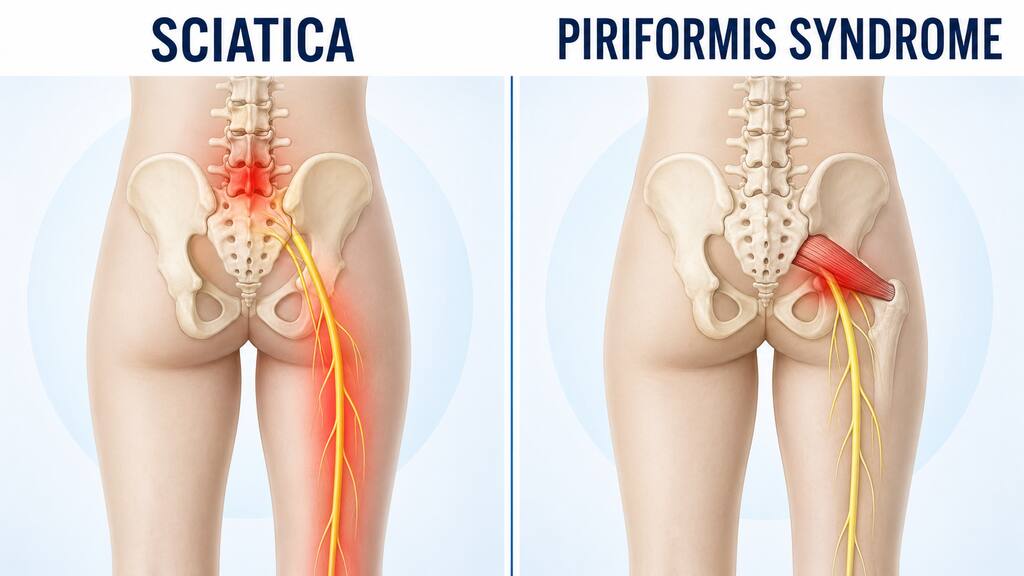
Sciatica vs Piriformis Syndrome: What Are the Differences?

Sciatica and piriformis syndrome can both cause pain in the buttock and leg. However, they affect the sciatic nerve in different places. Sciatica usually starts near the lower spine. Piriformis syndrome starts deep in the buttock. Since their symptoms can feel similar, a medical exam may be needed to find the cause.
In this guide, CPM explains the main differences between sciatica vs piriformis syndrome, including the causes, symptoms, diagnostic tests, and treatment options.
Table of Contents
ToggleWhat Is Sciatica?
Sciatica is nerve pain. It happens when the sciatic nerve or one of its nerve roots becomes irritated or compressed. The sciatic nerve starts in the lower back. It passes through the buttock and travels down each leg. Pressure on this nerve can cause pain anywhere along this path.
What Is Piriformis Syndrome?
The piriformis is a small muscle deep inside the buttock. It helps move and support the hip. Piriformis syndrome happens when this muscle irritates or presses against the sciatic nerve. It may cause pain, numbness, or tingling in the buttock, hip, or upper leg.
Running, climbing stairs, or sitting may make the pain worse. Piriformis syndrome can be hard to diagnose because it can feel like sciatica.
What Is the Difference Between Sciatica and Piriformis Syndrome?
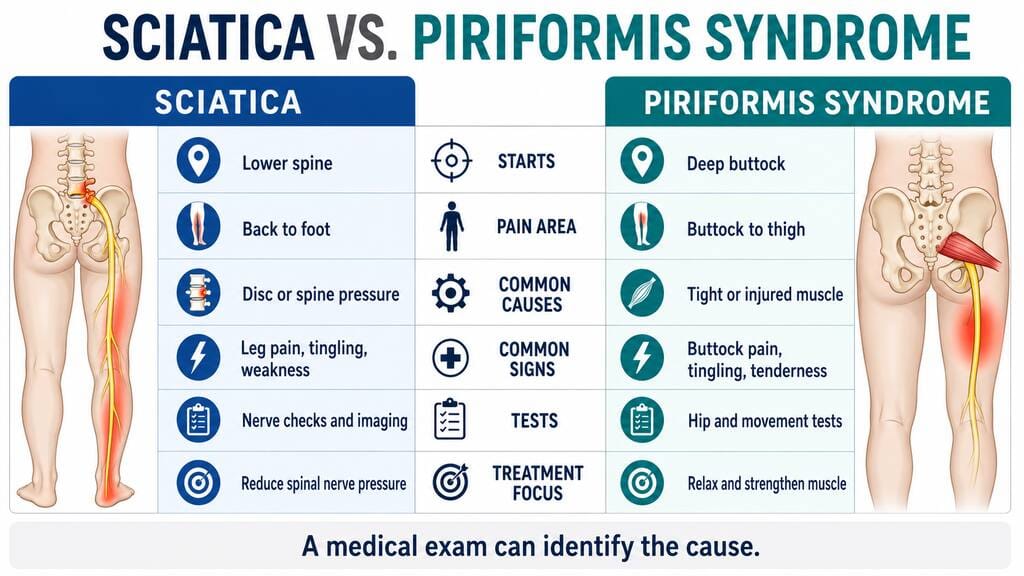
The main difference is where the sciatic nerve becomes irritated. Sciatica usually starts near the lower spine. Piriformis syndrome starts in the buttock. Both conditions can cause pain, numbness, or tingling that travels down the leg. A medical exam can help identify the source of the nerve irritation.
Primary Pain Area
Sciatica may begin in the lower back or buttock. The pain often travels down the back or side of one leg. It may reach the calf, foot, or toes. Piriformis syndrome usually causes deep pain in one buttock. The pain may spread into the hip, thigh, or back of the leg. Sitting on the affected side may make it worse.
Causes
Sciatica and piriformis syndrome can develop for several reasons. Sciatica usually results from a spinal problem that irritates a nerve root. Piriformis syndrome often develops when the piriformis muscle becomes tight, swollen, injured, or overworked.
| Sciatica Causes | Piriformis Syndrome Causes |
| Herniated disc | Piriformis muscle spasms |
| Spinal stenosis | Muscle tightness |
| Bone spurs | Muscle swelling |
| Degenerative disc disease | Buttock or hip injury |
| Spondylolisthesis | Repetitive hip movement |
| Spinal injury | Excessive exercise |
| Spinal tumor | Prolonged sitting |
| Spinal infection | Poor movement patterns |
| Pregnancy-related pressure | Weak surrounding muscles |
| Cauda equina compression | Scar tissue |
| Age-related spinal changes | Different nerve anatomy |
| Rare nerve damage | Sudden activity increase |
Symptoms
Sciatica symptoms may include:
- Lower back pain
- Sharp or burning leg pain
- Pain below the knee
- Numbness or tingling
- Leg or foot weakness
- Pain when coughing or sneezing
Piriformis syndrome symptoms may include:
- Deep buttock pain
- Buttock tenderness
- Hip or upper-leg pain
- Numbness or tingling
- Pain after sitting
- Pain during running or climbing
Both conditions can cause pain that travels down the leg. Sciatica is more likely to affect the lower leg or foot. Piriformis syndrome often causes more pain and tenderness in the buttock.
Diagnostic Tests
The tests for sciatica and piriformis syndrome are different because the nerve irritation starts in different areas. A provider will ask where the pain begins, where it travels, and which movements make it better or worse.
| Sciatica Tests | Piriformis Syndrome Tests |
| Leg strength tests | Hip movement tests |
| Reflex checks | Hip rotation tests |
| Skin sensation checks | Buttock pressure tests |
| Straight leg raise | Piriformis stretch tests |
| MRI or CT scan | Movement and pain checks |
| Nerve function tests | Tests to exclude other causes |
Sciatica tests focus on the lower spine, nerve roots, leg strength, and reflexes. MRI or CT scans may show a herniated disc, spinal stenosis, or another spinal problem. Piriformis syndrome tests focus on the hip and buttock. The provider may move the hip, stretch the piriformis muscle, and press on the painful area.
Imaging is not needed for everyone. There is no single test that always confirms piriformis syndrome, so the provider may need to rule out other back, hip, or muscle problems.
Treatment Approach
Treatment depends on what is causing the pain and how serious it is. Sciatica treatment targets the problem in the lower back. Piriformis syndrome treatment helps reduce pressure from the muscle in the buttock. Your provider will choose the right care based on your symptoms and test results.
Sciatica treatment may include:
- Activity changes
- Physical therapy
- Strength exercises
- Heat or cold therapy
- Medication
- Spinal injections
- Surgery in severe cases
Piriformis syndrome treatment may include:
- Short-term rest
- Activity changes
- Gentle stretches
- Hip exercises
- Physical therapy
- Heat or cold therapy
- Medication management or injections
A provider can choose exercises that fit your condition. Some stretches may make pain worse when they are not suitable for the cause.
When Should You Consult a Professional?
Mild pain may improve with rest and simple home care. However, pain that does not improve may need a medical exam. A provider can find the cause and help prevent the problem from getting worse.
Consult a medical professional if the pain:
- Lasts more than a few days
- Gets worse
- Keeps coming back
- Affects your sleep or walking
- Causes ongoing numbness
- Causes leg or foot weakness
- Starts after an injury
Get medical help right away if you lose control of your bladder or bowel, feel numbness around your groin or inner thighs, or develop sudden leg weakness. These may be signs of serious pressure on the nerves.
Final Thoughts
When comparing sciatica vs piriformis syndrome, the main difference is where the nerve problem begins. Sciatica usually starts near the lower spine. Piriformis syndrome starts in the buttock. Because the symptoms may overlap, a medical exam is important. Comprehensive Pain Management can find the cause of your pain and recommend a treatment plan based on your needs. Contact our team to schedule an appointment.
FAQs
Why Is Distinguishing Between Piriformis Syndrome and Sciatica Important?
The conditions may need different exercises and treatments. A correct diagnosis helps your provider treat the source of the pain.
Can You Have Piriformis Syndrome and Sciatica at the Same Time?
Yes. The sciatic nerve may become irritated near the lower spine and again near the piriformis muscle.
What Is Worse, Piriformis Syndrome or Sciatica?
Neither is always worse. The severity depends on the cause, pain level, weakness, and effect on your daily life.
How Can You Tell if the Pain Is From Sciatica or the Piriformis Muscle?
Sciatica often starts in the lower back, while piriformis syndrome usually causes deep pain in one buttock.
When Should You See a Doctor for Sciatica or Piriformis Syndrome?
See a doctor if pain persists, worsens, causes weakness or numbness, or makes walking and daily activities difficult.

Dr. James KellerShabrokh
Dr. James KellerShabrokh is a board-certified specialist in Physical Medicine and Rehabilitation, focusing on spine, joint, muscle, and nerve injuries. He combines rehabilitative care, minimally invasive procedures, and preventive strategies to restore function, improve mobility, and provide long-term pain relief.